
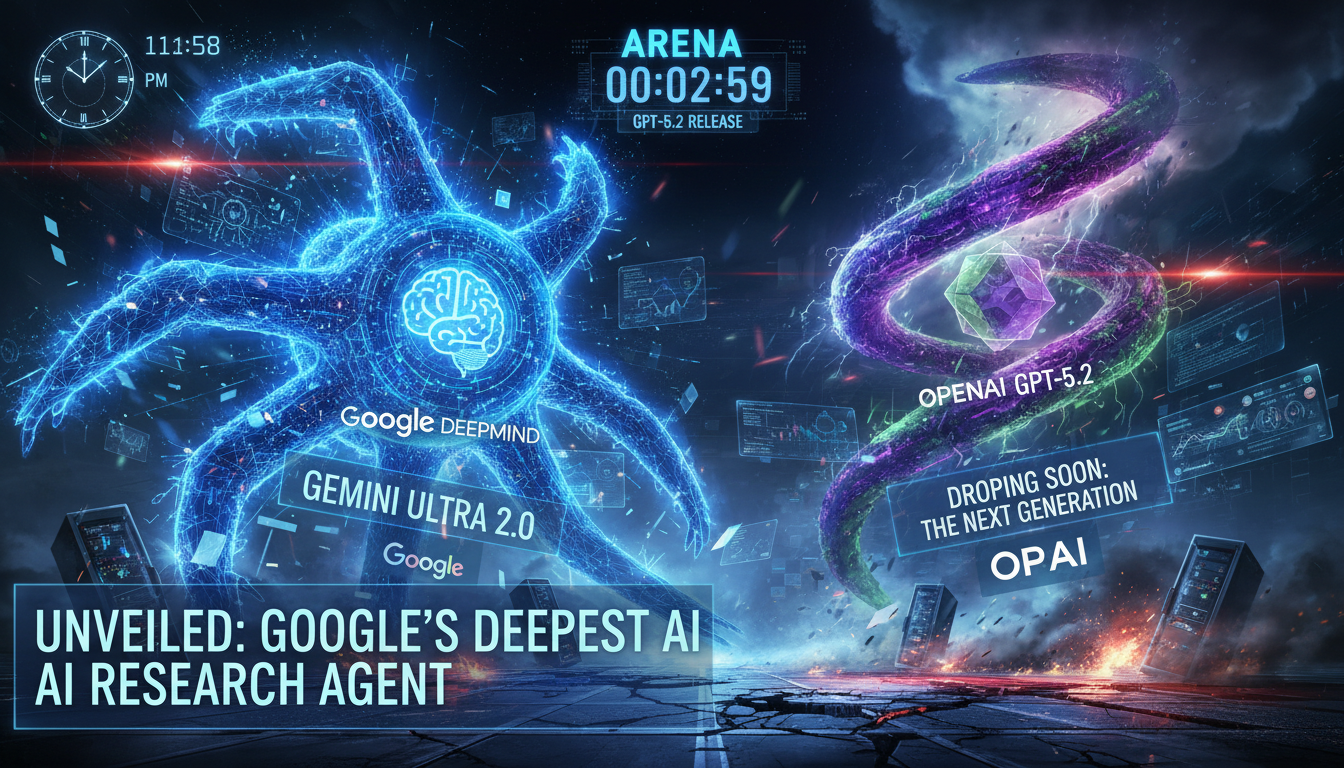
In a span of just a few hours, the global AI landscape shifted. Google unveiled its deepest research agent to date—a system engineered to push the boundaries of autonomous reasoning—only for OpenAI to follow with the release of GPT‑5.2. The timing wasn’t coordinated, but the effect was unmistakable: the industry is entering a new era defined by rapid, high‑stakes innovation.
The Strategic Context
For years, Google and OpenAI have shaped the direction of AI development, but the latest announcements signal a shift from incremental progress to strategic leaps. Google’s new research agent emphasizes advanced autonomous reasoning and long‑horizon problem‑solving, while OpenAI’s GPT‑5.2 focuses on scalable multimodal intelligence and improved reliability across complex tasks.
Both companies are converging on a shared vision: AI systems that don’t just respond, but act, plan, and collaborate.
Key Industry Implications
- Acceleration of innovation cycles The gap between major releases is shrinking. What once took quarters now unfolds within hours, reshaping competitive expectations.
- Rise of agentic architectures Both announcements highlight a shift toward systems capable of multi‑step reasoning, tool use, and autonomous execution.
- Enterprise readiness challenges As capabilities expand, organizations must strengthen governance, integration strategies, and risk‑management frameworks.
- Market differentiation pressures Vendors across the ecosystem will need to reassess product roadmaps and value propositions in light of these advancements.
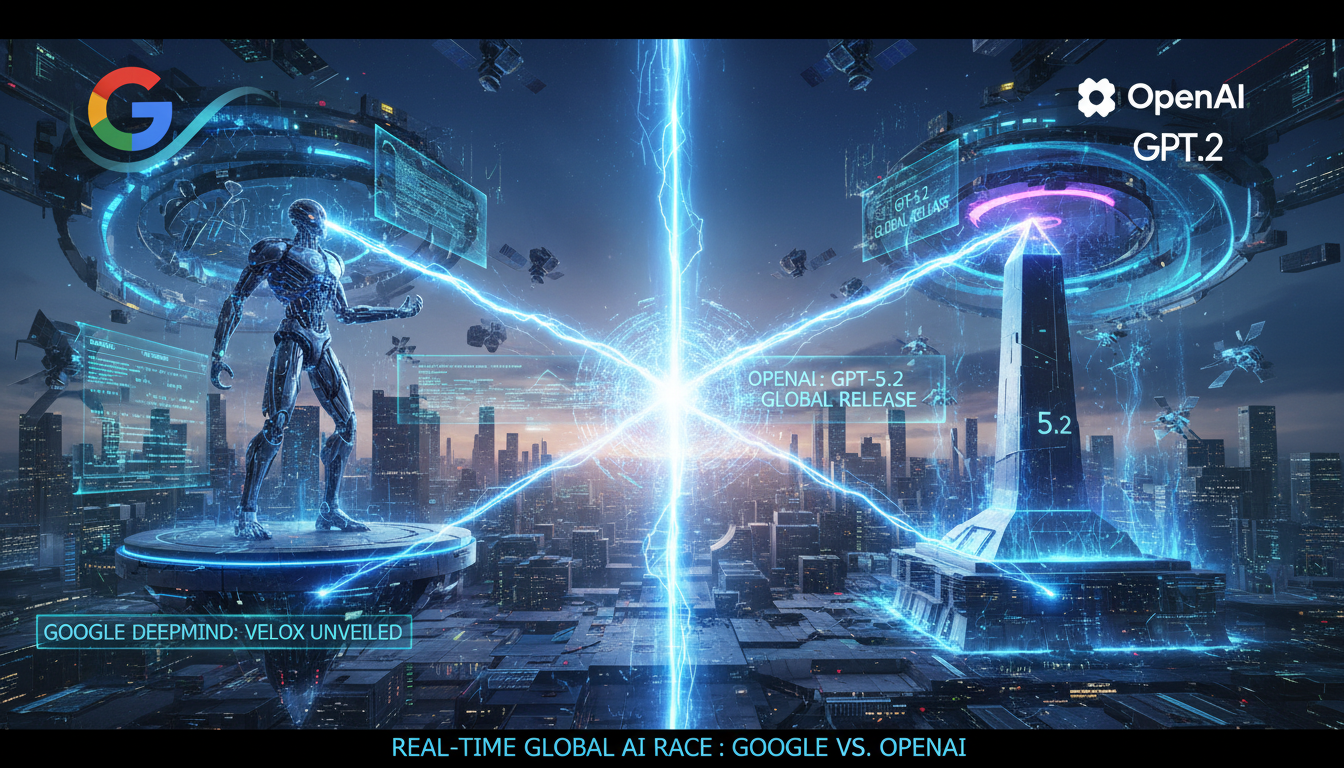
What This Means for Organizations
The dual announcements underscore a broader reality: AI leadership is no longer defined solely by model size or benchmark performance. Instead, it hinges on strategic deployment, responsible scaling, and the ability to translate breakthroughs into operational value.
Enterprises that prepare thoughtfully—investing in infrastructure, governance, and talent—will be best positioned to capture the opportunities emerging from this new wave of intelligent systems.
Looking Ahead
The question isn’t which company “won” this round. It’s how the industry adapts to a world where transformative AI capabilities can emerge in rapid succession. Google and OpenAI have made their moves. The next steps belong to the organizations deciding how to integrate, govern, and leverage these technologies.


Leave a Reply